
How to Choose the Best Roof Style for Your House
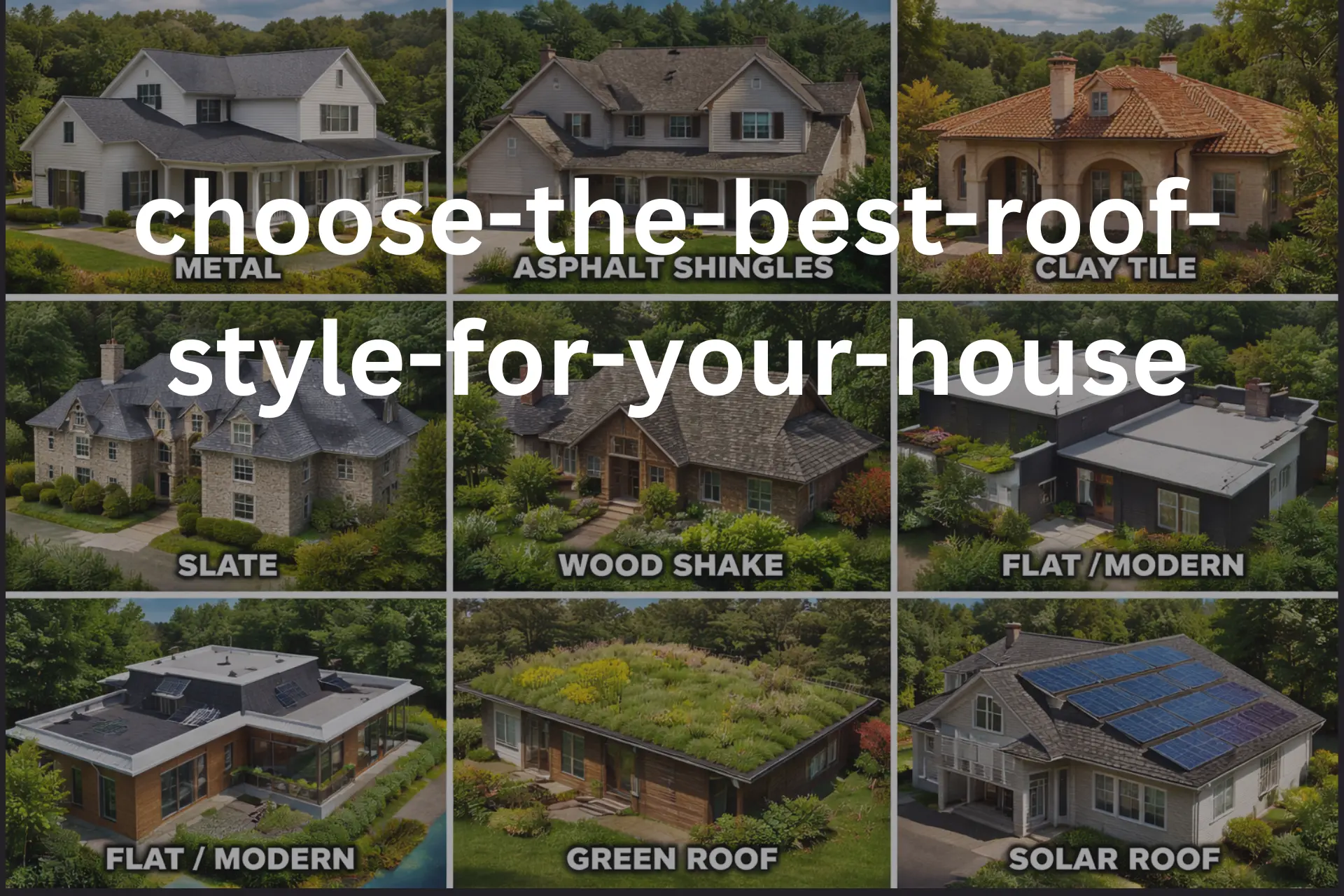
How to Choose the Best Roof Style for Your House
Your roof does more than just keep the rain out; it's also one of the most significant features of your home's design. The shape, slope, and structure of your roof all determine how appealing it is from the street, how long it lasts, how energy-efficient it is, and even how much your house will be worth in the long run.
A lot of homeowners don't think about how the type of roof they have affects how their home looks as a whole. There are more things to think about than just how the roof appears. You should also think about how well it operates, how well it integrates with the environment, and how well it fits with the building.
This full guide will teach you everything you need to know about picking the best roof design for the style of your home. This article will help you make a wise, well-thought-out, and long-lasting option, whether you're putting a new roof on your house, fixing up an old one, or planning a huge overhaul.
The style of your roof is more essential than you might believe.
People can see the rooftop from the street right away. It gives the building its shape, defines the proportions, and sets the tone for the architecture. The roof might make up as much as 40% of the outside of your home in some circumstances.
But your roof design does more than just look nice. It also does a lot of important things:
It determines how well trash, snow, and water drain.
It has an impact on how well the attic is aired and insulated.
It modifies how the weight is spread out over the structure.
It helps preserve power.
It changes how people feel about resale and how interested purchasers are.
It changes how much care is needed over time.
If the roof style doesn't go well with the rest of the house, it can look uncomfortable or out of place. It could also make drainage harder, lower the building's efficiency, or boost energy bills.
On the other side, a well-chosen roof makes the building seem better and work better. It helps things look nicer and protects them better from stress from the outside world.
To put it simply, your roof is both a part of the design and a functional system, so you should give it some thought.
How the style of your roof influences how much your property is worth and how it looks from the street
The way your home looks from the street affects how others think about its quality and upkeep. Real estate gurus always say that a buyer's decision can be made in seconds based on how a house looks from the exterior.
A roof that fits the style of the building:
Brings balance and harmony to the eye
Makes the proportions better overall
Makes the work look better
It looks like it will last and stay stable.
Makes it worth more when you sell it
A modern minimalist home might look beautiful with a sleek flat roof, but a classic colonial home wouldn't. A gambrel roof makes a farmhouse look more charming, yet it could not fit in with current styles.
People typically ponder about the style and condition of the roof when they look at homes, even if they don't realize it. A roof that complements the architecture of the structure makes it look like it was built on purpose. This can make the property worth more and sell faster.
Consistency in architecture is vital in real estate markets where there is a lot of competition. A home that "looks right" tends to get greater offers.
Knowing the architectural style of your home
Before you can pick a roof type, you need to know what kind of architecture your house has. Every type of architecture has its own unique qualities, such the way roofs bend.
Some common types of architecture are:
Traditional Colonial: This style features a balanced layout and proportions that are typical of the time. People often use it with gable or gambrel roofs.
Modern Contemporary: Flat or shed roofs, simple lines, and little embellishments are prevalent.
Farmhouse: basic and useful, having a rustic feel. They usually feature roofs that are gable or gambrel.
Mediterranean: stucco on the outside and tile on the inside, and sometimes hip roofs and clay tiles.
Craftsman: Gables that aren't too steep, wide eaves, and rafters that are easy to view.
Tudor: high hills, loads of fancy decorations, and strong gables.
Minimalist: Roof systems with flat or single-pitched roofs and simple geometric lines.
There have always been types of roofs that go with each of these styles. It is important to match your roof to the architecture of your building so that it seems natural and is in equilibrium.
Consider this:
What style or historical period did I employ to decorate my home?
Is the design in balance or out of balance?
Does the framework give more weight to vertical lines or horizontal lines?
Is the concentrate on making things simple or making them look nice?
Does the house want to be warm and inviting like a traditional home or sleek and sophisticated like a modern home?
Answering these questions might help you identify roof styles that match the way your property is designed instead of clashing with it.
The Best Places for Common Roof Styles
It's easy to pick a roof when you know about the many kinds. Each type has its own benefits in terms of design and structure.
Gable Roof: A Classic Choice for Vintage Homes
The gable roof is one of the most frequent and well-known forms of roofs. There are two sloping sides that meet at a central ridge to form a triangle.
Homeowners like it because:
Good drainage for snow and water
Simple to put together
Cheap framing
A deep sense of what is beautiful in the past
Easy attic ventilation
Best for:
Colonial-era homes
Plans for craftspeople
Homes for families in the suburbs
Cottage-style homes
But if they aren't properly reinforced, gable roofs can be fragile in very powerful winds. Structural bracing and good fastening are very critical in regions where storms are likely to happen.
The gable roof is still one of the most adaptable and affordable options, though.
Hip Roof: Strong and Can Handle Wind
A hip roof slopes down on all four sides, which makes the building more stable and smaller.
Some of the benefits are:
More resistant to wind
The structure is more stable
A look that is classy and well-balanced
Very strong in coastal locations
Best for:
Homes in the Mediterranean
Homes on the coast
Large homes in the suburbs
Homes that are both modern and transitional
Hip roofs are especially robust in places where hurricanes are common because they spread weight evenly. It takes a little more work to create them, but they last a long time and are robust.
Flat Roof: Works Well with Modern and Contemporary Styles
Flat roofs are one of the most crucial features about modern architecture. They aren't entirely level (there's a slight slope for drainage), but they do have a clean horizontal contour.
Some good things are:
A sleek, modern look
How useful rooftops are (for gardens, terraces, solar panels, etc.)
At start, framing is less complicated.
Making good use of materials
Best for:
New homes in cities
Designs that are based on what works in business
Homes that look like stores
Architecture that is good for the planet
But you need to plan carefully for drainage and use high-quality waterproof membranes on flat roofs. If things aren't put together right, water that pools can break them before they are supposed to.
Mansard Roof: Looks good and gives you more room
There are four sides to the mansard roof, and each side has two slopes. The slope on the bottom is steeper than the slope on the top.
Pros:
Gives you the most room in your home and attic
Adds beauty to the architecture
Has a major effect on how things look
Allows you to have dormer windows
Commonly seen in:
French-inspired homes
Buildings that are old
Luxury homes
This kind is more sophisticated and might cost more to build. But it makes the inside look and feel a lot better, plus it gives you a lot more room.
The Gambrel Roof looks fantastic on Colonial and Farmhouse Styles.
Barns commonly have gambrel roofs. Like mansard roofs, they feature two slopes on each side, but only two sides.
Pros:
More room on the top level
Charming farmhouse style
Good drainage of water
Cheap framing for long spans
Best for:
Farmhouses
Homes in the nation
Buildings from the Dutch Colonial period
Its well-known shape makes it both stylish and utilitarian.
Shed Roof: A Look That Is Simple and Modern
There is only one sloping surface on a shed roof. It looks modern and has clean lines.
Pros:
Easy to put together
Good drainage for water
How modern architecture looks good
Great for installing solar panels on top of
Good for:
Today's homes
Additions and extensions
Sustainable design projects
People often use shed roofs to make ceilings look higher and let in more light from outside.
Things to Keep in Mind When Picking a Roof Style
A roof performs better when the weather is nice. It will last longer and cost less to maintain up if you pick a roof type that works in your area.
In places where it snows, steep roofs like gable or gambrel roofs keep snow from piling up and make the building less likely to break.
Windy Areas: Hip roofs are better at keeping the wind out and minimizing the chance of uplift.
In warmer places, roofs that are flat or light-colored and built of materials that reflect light are better at keeping the heat out and using less energy.
Steeper slopes enable water drain quicker and minimize the risk of damage in places where it rains a lot.
If you don't consider about how the roof will hold up in bad weather, it could cost more to fix and last less long.
Things to think about concerning the structure before you make a choice
The type of roof that can be installed on your home depends on its base and framing structure.
Here are some crucial things to consider about:
Ability to carry weight
Requirements for the ceiling's height
Framing's difficulty
Ventilation systems for attics
The current layout of the building (for renovations)
How strong the foundation is
For example, if you want to change a flat roof to a mansard roof, the building will need a lot more support.
Talk to a structural engineer or architect if you want to be sure that the sort of roof you choose is safe and won't hurt the structure.
Choosing the Right Materials for Your Roof Design
The roof's style and the material utilized for the roof must go well together.
For example:
Gable and hip roofs look well with asphalt shingles.
Metal roofs look fantastic on new homes and barns.
Clay tiles look fantastic on hip roofs in the Mediterranean style.
Slate makes roofs with a classic or mansard shape look better.
Wood shakes look fantastic on farmhouse designs that are rustic.
If you use the wrong material, it might harm how well it operates and how it appears. You should think about how heavy it is, how long it lasts, how well it functions in varied weather, and how easy it is to take care of.
Things to think about to save energy and get fresh air
The shape of a roof has a direct effect on how well it lets air in and keeps heat in.
Good airflow:
Keeps heat from building up
Lowers the price of energy
Makes the roof last longer
Lessens damage from water
Keeps mold from growing
Flat roofs need better insulation and moisture barriers, but steeper roofs frequently let more air flow through the attic.
If you live in an area that is very hot or very cold, energy-efficient roofing systems can help you save a lot of money on heating and cooling expenditures over time.
Making a budget: The expenses of different types of roofs
The price depends on how hard the building is to build.
In general:
Gable roofs are among the cheapest.
Hip roofs cost a little more since they have greater slopes.
Building mansard and gambrel roofs costs extra.
Flat roofs could cost less at first, but they need to be carefully sealed so they don't leak.
You should also ponder about:
Long-term upkeep
The material's life
How often repairs are needed
What this means for insurance
In the long term, paying a bit extra up front can save you money.
The building codes in your area and how your neighborhood looks
In many cities, zoning restrictions determine how roofs are erected.
Sometimes, homeowners' associations may ban particular types of roofs to maintain the neighborhood looking the same.
Before you decide:
Look up the rules for building in your area.
Check out the rules for your area.
Get the right licenses
Look at the constraints on height and slope.
Following the regulations keeps things from getting delayed, costing more money to redesign, and getting into trouble with the law.
Things to Stay Away From When Picking a Roof Style
Not thinking about how the weather may effect things If you care more about style than performance, your roof may not last as long.
Not paying attention to structural limits Not all styles of roofs work with all types of housing frames.
Not taking care of maintenance needs Some styles need more attention than others.
Only Paying Attention to What's Hot Trendy styles may not survive long. Choose something that will always look good above something that is in style right now.
Not taking the budget into account More intricate roof types can cost more than you think they will.
You will be able to make better choices in the long term if you don't commit these mistakes.
When to Call an Architect or Roofer
When you need a pro to aid you,
Building a home customized for you
When you remodel, you might change the roof structure.
Living in regions where the weather is very different
Investing in high-quality roofing materials
Installing solar systems
Experts check that the design works well together, the construction is safe, and the performance lasts for a long period.
What You Should Know About Planning with a Professional vs. Yourself
You can find out about different types of roofs on your own, but you can't plan the structure on your own.
You can use DIY to:
Coming up with design ideas
Looking at different kinds of materials
Figuring out the budget
Checking to see if the architecture works with it
You need to know a lot about the following:
Changes to the structure
Engineering math
Getting permission for permits
Ways to make things waterproof
Safe installation
When putting on a roof, it's not worth it to cut corners or do things wrong.
Last Thoughts on Picking the Right Roof Style
Choosing the proper roof type for your home is both an artistic and a technical decision. Planning for the building's finances, structure, climate, and appearance is necessary.
A roof that blends well with the rest of the house makes it appear better, saves energy, lasts longer, and makes the house worth more.
No need to hurry. Consider the look of your home. Think about how you'll take care of it over time. Get competent help when you need it.
Your roof is more than just a roof; it's a crucial aspect of your home's beauty and safety. If you make smart choices, your home will look attractive, be safe, and perform well for many years.
Questions and Answers
What kind of roof works best in warm weather?
Flat or low-slope roofs composed of materials that reflect light perform well in hot places. Having the correct insulation and ventilation is very important.
What type of roof lasts the longest?
When it comes to how long something lasts, the material is more important than the shape. Hip roofs, on the other hand, tend to do better in harsh weather since they are more stable.
Can I modify the look of my roof while I'm working on it?
Yes, but it needs to be checked for structural problems, get permissions, and have expert planning. Costs depend on how hard things are.
How can I choose a roof that will make my property worth more when I sell it?
Pick a style that fits with the style of your home, works well in your area, and uses materials that are both strong and pretty. Most of the time, buyers want designs that will always be in style.